
Soil Structure
High Sodium Soil: How to Identify, Manage and Flush It
High sodium soil suffocates structure and starves plants. Here's how to identify it and fight back.
By Andy Church | Published July 19, 2024
The Unseen Threat of Salinity
When we think of soil problems, we often think of compaction or pH. But an excess of sodium (Na) can be just as destructive, if not more so. High sodium levels lead to a condition known as sodic soil, which systematically dismantles good soil structure and creates a toxic environment for plants.
Here's how the damage unfolds:
- Structural Collapse: Sodium ions force clay particles apart, causing the soil to lose its structure. It becomes hard, cloddy when dry, and sticky when wet, with almost no pore space.
- Suffocated Roots: With no pore space, water and air cannot penetrate the soil. This suffocates the roots and leads to severe waterlogging.
- Nutrient Lockout: Sodic soils prevent plants from taking up essential nutrients, even if they are present in the soil.
- Direct Toxicity: High concentrations of sodium are directly toxic to most plants, inhibiting growth and eventually leading to plant death.
Identifying a Sodium Problem
Sodic soils often have a dark, greasy appearance on the surface when wet. You might notice water pooling for long periods and a general failure of plants to thrive despite adequate fertilization. However, the only definitive way to know if you have a sodium problem is through a professional soil analysis that tests for the Exchangeable Sodium Percentage (ESP). An ESP above 15% typically indicates a severe issue.
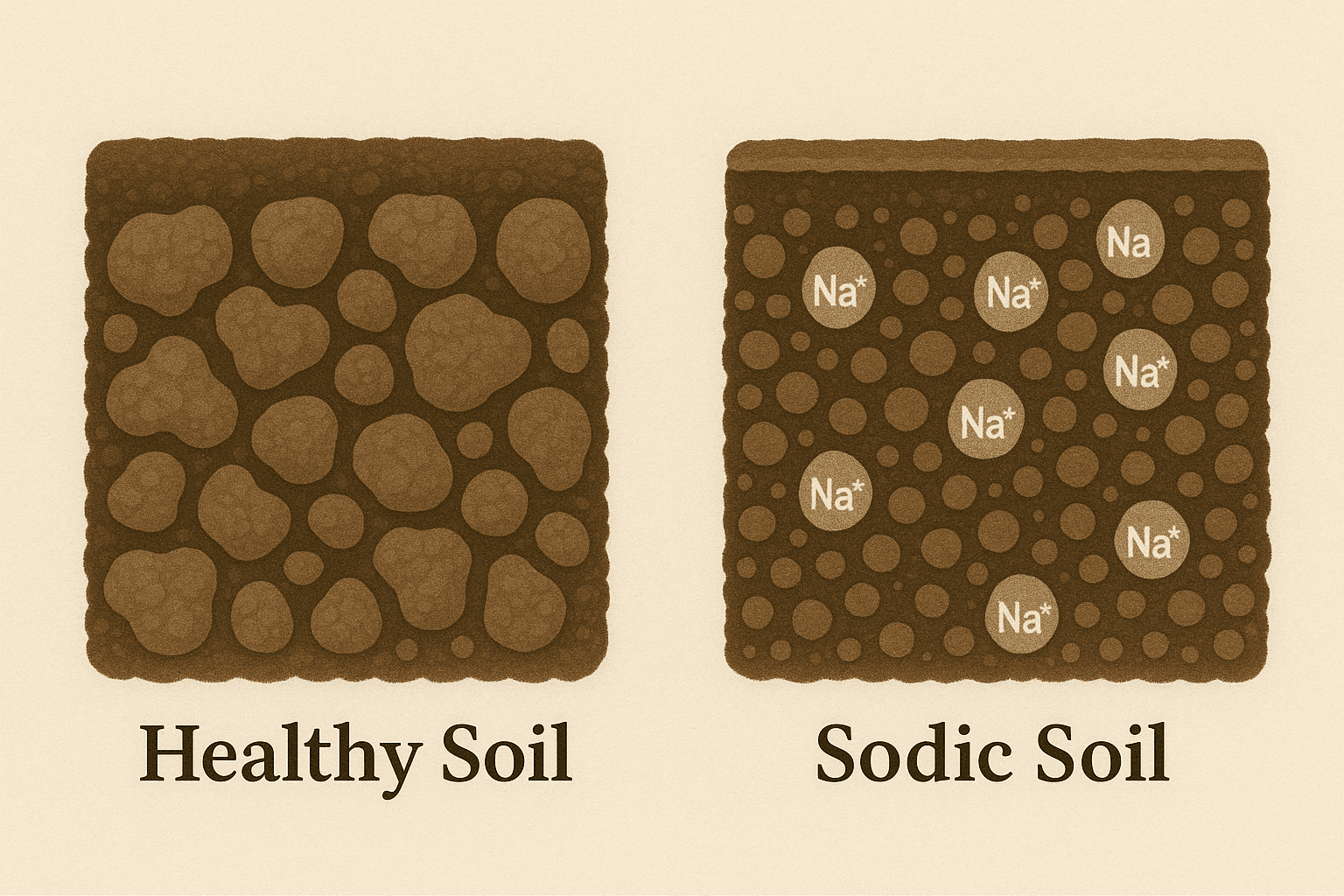
High sodium levels destroy the porous structure essential for healthy plant life.
The Two-Step Solution: Flush and Fortify
Tackling high sodium requires a two-pronged attack. First, you need to displace the sodium ions from the clay particles. Second, you need to strengthen the plant to help it recover from the toxic effects.
This is achieved with a powerful combination of liquid calcium and silicon. Calcium is crucial for displacing sodium, effectively kicking it out of the soil structure so it can be leached away. Silicon plays a vital role in strengthening the plant's cells, making it more resilient to the stress caused by sodium toxicity.
Our Professional Sodium Management System
Step 1: Flush with GYP-FLO
With its ultra-fine 5-micron particle size, GYP-FLO provides a massive dose of available calcium to aggressively displace sodium ions, breaking down the sodic structure and allowing the harmful salts to be flushed from the rootzone.
Step 2: Fortify with Caroll
Caroll is a specialized liquid formulation of Calcium and Silicon. It provides further calcium to aid soil recovery while delivering essential silicon to strengthen plant cell walls, helping the plant build tolerance and recover from sodium-induced stress.
Conclusion: Reclaim Your Soil from Salinity
A high sodium level is a serious threat to the productivity and health of your soil. But with the right strategy and tools, it is entirely manageable. By using a powerful combination of a high-availability liquid gypsum like GYP-FLO to flush the sodium and a fortifying agent like Caroll to rebuild plant resilience, you can reclaim your soil and restore its productive potential.