
Nutrient Management
Soil pH: A Practical Guide to Testing and Correction
Soil pH decides whether the fertiliser you spread ever reaches the plant. Get it right and everything else works harder.
By Andy Church | Published July 28, 2024
The Most Important Metric You Might Be Ignoring
You can apply the best fertilizers in the world, but if your soil's pH is out of balance, your plants simply can't use the available nutrients. Think of pH as the gatekeeper of your soil's pantry. When the gate is locked (i.e., the pH is too low or too high), essential nutrients like Nitrogen (N), Phosphorus (P), and Potassium (K) remain out of reach.
For most turf and crops, the ideal soil pH is between 6.0 and 7.0. In the UK, however, our soils are often naturally acidic (below 6.0) due to rainfall and other environmental factors. An acidic soil leads to:
- Wasted Fertilizer: Nutrients get locked up in the soil, unavailable for plant uptake, meaning your fertilizer budget is not being used effectively.
- Poor Plant Vigor: Plants become yellow and stunted due to a lack of essential nutrients.
- Increased Toxicity: Acidic soils can increase the solubility of toxic elements like aluminum and manganese, which can harm plants.
How to Test Your Soil pH
Before you can correct the problem, you need to diagnose it. Testing your soil pH is simple and can be done in a few ways:
- Professional Lab Analysis: This is the most accurate method. A soil sample is sent to a lab for a detailed report on pH and nutrient levels.
- DIY Soil Test Kits: Available at garden centers, these kits provide a quick and easy way to get a general idea of your soil's pH.
- Electronic Meters: These probes are inserted directly into the soil to give an instant pH reading.
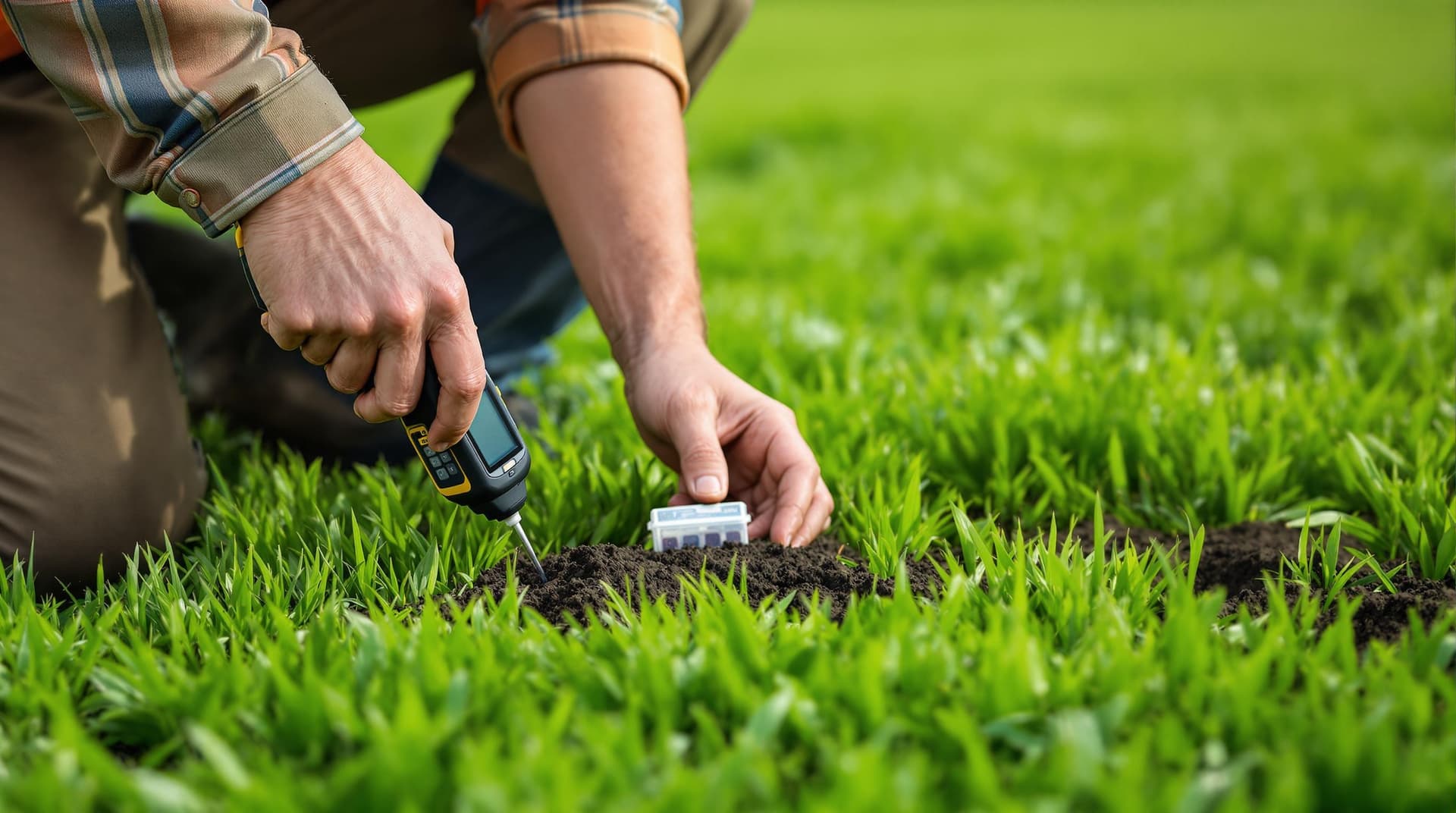
Regularly testing your soil is the first step to effective nutrient management.
Correcting Acidity: The Modern Approach
For decades, the go-to solution for acidic soil has been bulk application of granulated lime. However, this method is slow, messy, and imprecise. The large particles can take years to break down and have a meaningful effect on pH.
The modern, professional approach is to use a liquid calcium carbonate solution. Liquid application ensures even coverage and, more importantly, the micronized particles get to work instantly, neutralizing acidity far more rapidly than granular alternatives.
The PH PLUS Advantage
PH PLUS is a technical grade liquid suspension of calcium carbonate designed for rapid pH correction. Its formulation ensures immediate availability, allowing for precise control over your soil's chemistry.
Instead of waiting seasons for bulk lime to take effect, PH PLUS starts working on contact, unlocking nutrient availability and strengthening your plants with essential calcium from day one.
Conclusion: Take Control of Your Soil Chemistry
Don't let acidic soil undermine your hard work and investment. By regularly testing your pH and using a modern, fast-acting solution like PH PLUS, you can ensure your plants have access to the nutrients they need to thrive. It's one of the simplest and most cost-effective ways to improve the health and appearance of your turf or crops.